A Restriction and a Ban Are Not the Same Thing
TikTok has several ways it can respond when content or activity doesn't meet its standards.
Depending on the situation, TikTok may:
End a LIVE session
Remove content
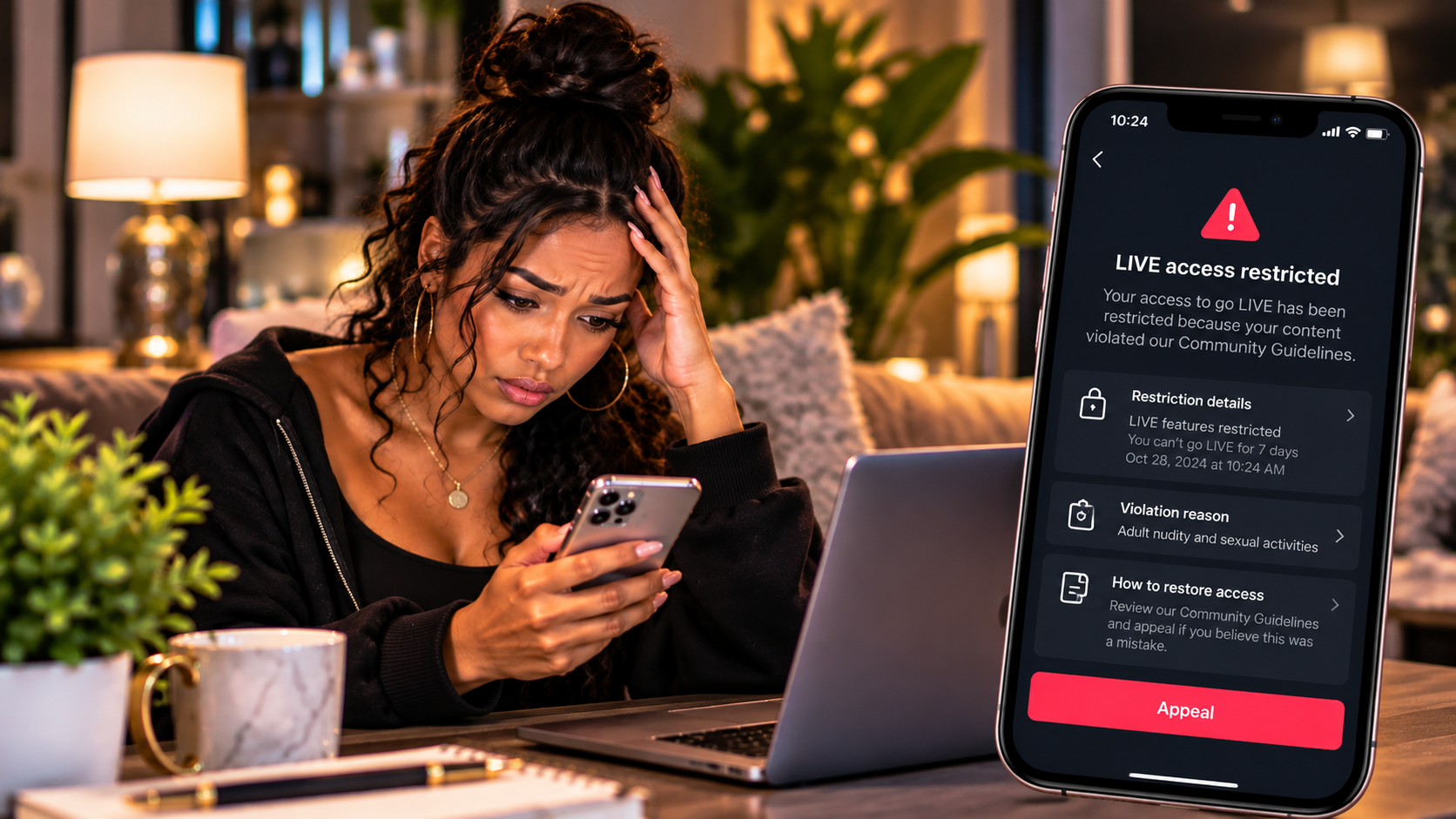
Limit access to LIVE
Restrict certain LIVE features
Limit the visibility or recommendation of a LIVE
Restrict content to viewers 18 and older
Issue an account warning or strike
Permanently ban an account in serious or repeated cases
That means you shouldn't automatically assume every enforcement action means your entire account is being banned.
At the same time, don't ignore smaller restrictions. They can be a warning that something about your content or LIVE behavior needs your attention.
What Is a LIVE Restriction?
A LIVE restriction generally means TikTok has limited your ability to use LIVE or certain LIVE features.
Some restrictions may be temporary. Others can affect how your LIVE is distributed or which viewers can see it.
This matters because your LIVE may technically still exist while its ability to reach new viewers is affected.
For a creator trying to build a community, reach matters.
If TikTok determines that LIVE content isn't appropriate for younger audiences, for example, the LIVE may be restricted to adults. Other content may be allowed to remain on TikTok but may not qualify for broader recommendation.
So remember:
Allowed on TikTok does not always mean eligible for maximum distribution.
That's an important distinction for serious creators.
What Is a Ban?
A ban is more serious.
Depending on the violation and enforcement decision, TikTok can temporarily remove access to a feature or permanently remove an account from the platform.
Repeated violations can increase the seriousness of enforcement, while certain severe violations can result in stronger action immediately.
This is why trying to figure out exactly "how many violations you can get away with" is the wrong mindset.
Your goal should be to understand the rules well enough that violations become the exception—not part of your normal LIVE experience.
Your Guests Can Affect Your LIVE
This is one of the most important things every LIVE host should understand:
You are responsible for the room you host.
Going multi-guest doesn't mean you can ignore what another person is doing simply because they aren't you.
If a guest begins displaying or discussing content that violates TikTok's rules, the LIVE itself can be affected.
That means being a good host sometimes requires taking control.
You may need to:
Mute someone
Remove a guest
Redirect a conversation
Stop inappropriate behavior
End an activity before it goes too far
This can feel uncomfortable, especially when the person is your friend.
But protecting your LIVE has to come before protecting someone's feelings.
"But I Didn't Say It" Isn't Always Enough
LIVE is different from uploading a prerecorded video.
It's happening in real time.
You may have guests talking, comments flying across the screen and conversations changing direction quickly. That makes moderation an important LIVE-hosting skill.
Don't wait until something becomes completely out of control before reacting.
Pay attention to where the conversation is going.
A strong LIVE host learns to recognize when a conversation is moving toward harassment, threats, sexually explicit discussion, dangerous behavior, scams, prohibited transactions or other content that could violate platform rules.
You don't have to panic every time someone says something questionable.
You do need to stay in control of your room.
Some Content Can Stay Up and Still Lose Reach
This is another area creators often misunderstand.
TikTok distinguishes between content that is prohibited and content that may be allowed but isn't appropriate for broad recommendation.
Certain content can be:
Allowed — permitted on the platform.
Age-restricted — limited to adult audiences.
Not eligible for recommendation — allowed to exist but not eligible for the same type of distribution.
Removed — determined to violate TikTok's rules.
Those differences matter.
If you're constantly creating borderline content, you don't necessarily have to receive a permanent ban before your growth is affected.
For LIVE creators, visibility is part of the business.
Be Especially Careful With Mature Conversations
Adult creators sometimes assume that because everyone in a conversation is an adult, anything goes.
That's not how TikTok's rules work.
Sexually explicit language and certain sexualized behavior can violate platform rules, while some other mature or suggestive content may be age-restricted or excluded from broader recommendation.
This is especially important for creators hosting relationship panels, adult discussions, games or other conversation-based LIVEs.
You can discuss mature subjects without turning your LIVE into explicit content.
Talk about the issue. Don't perform the issue.
The way you frame a conversation matters.
Other Areas LIVE Hosts Should Understand
Every creator should eventually become familiar with TikTok's full Community Guidelines, but LIVE hosts should pay particular attention to rules involving:
Bullying and harassment
Hate speech and hateful behavior
Threats and violence
Sexual content and nudity
Dangerous activities
Alcohol, drugs and other regulated goods
Gambling and gambling-like activities
Scams and deceptive behavior
Fake engagement
Copyright and intellectual property
Personal information and privacy
Youth safety
Commercial and promotional content
Don't assume something is allowed simply because you've watched another creator do it.
You don't know whether that creator has received warnings, whether their content has been restricted, whether they're currently appealing a decision or whether enforcement simply hasn't occurred yet.
Another creator getting away with something is not a TikTok policy.
What Should You Do If Your LIVE Is Restricted?
First, don't panic.
Read the notification TikTok sends you.
Find out what content or behavior TikTok says caused the enforcement action and which policy is involved.
Then ask yourself:
What exactly was happening when this occurred?
Think beyond your own words.
Was someone else speaking?
Was music playing?
Was something visible in the background?
Was a guest behaving inappropriately?
Was an activity taking place that could have been interpreted differently from what you intended?
Understanding what happened is more useful than immediately assuming TikTok is targeting your account.
What If TikTok Made a Mistake?
Creators have the ability to appeal certain enforcement decisions.
If you genuinely believe a decision was incorrect, use TikTok's appeal process and explain the situation clearly.
An appeal should focus on why you believe the content complied with the applicable policy.
Avoid treating the appeal box like a place to vent frustration.
Explain the context.
TikTok itself recognizes that context can matter when evaluating certain types of content, particularly educational, documentary, medical, scientific, artistic, satirical or counterspeech material.
When appropriate, make your context obvious in the content itself instead of expecting a reviewer to guess your intention.
Don't Try to Work Around a Restriction
If TikTok restricts LIVE access on one account, attempting to use another account to bypass that restriction can create an additional problem.
A restriction is something to address—not something to sneak around.
Review the notice, understand what happened, appeal when appropriate and learn from the situation.
Protect the long-term health of your account.
Build a "Host Mindset," Not a "Ban Mindset"
Creators sometimes become so afraid of violations that they become scared to talk, joke or have fun on LIVE.
That's not the goal either.
The goal is awareness.
A trained LIVE host knows the boundaries, understands the room and can recognize when something needs to be redirected.
Think of yourself as the person running the room.
You set the tone.
You decide who comes onto your panel.
You determine what behavior continues.
You decide when it's time to redirect a conversation.
And sometimes you have to make the unpopular decision to remove someone because protecting your community and your account comes first.
Before Every LIVE, Remember These 5 Things
Know your content. Have a general idea of what you're doing or discussing before you start.
Know your guests. Don't give someone control of your LIVE simply because they're entertaining.
Watch your room. Pay attention to conversations, behavior and what's appearing on screen.
Correct problems early. It's easier to redirect something questionable than recover after it becomes a serious violation.
Keep learning the rules. TikTok policies can change. Don't assume what you learned six months ago will always remain exactly the same.
The Bottom Line
Being a successful LIVE creator isn't only about being entertaining.
It's also about learning how to operate responsibly on the platform you're building on.
Restrictions can affect your ability to go LIVE, use certain features or reach audiences. Serious or repeated violations can put your account at greater risk.
But fear shouldn't be your strategy.
Education should be.
Learn the rules. Learn how to control your room. Learn how to moderate your guests. And when you're unsure about something, check TikTok's current policies instead of relying on rumors from other creators.
The more you understand the platform, the more confidently you can create on it.
Mindset Live Entertainment
Helping creators build the mindset, skills and knowledge to become stronger LIVE hosts.
Creator Tip: TikTok's policies change over time. Always review TikTok's current Community Guidelines and in-app notices for the most up-to-date information affecting your account.